
Why is protein suddenly everywhere?
Protein is hot right now. When I asked my girlfriends what types of articles they’d be interested in reading, other than perimenopausal weight gain, protein was on everyone’s mind. From ‘how much should I be eating’ to ‘what kinds of protein are the best’ and ‘why do I need so much of the stuff’, it seems as though protein intake is on everyone’s radar right now. Especially for women in that midlife perimenopausal and post menopausal stage. So let’s take a bit of a deep dive on protein. Starting at the very beginning (“a very good place to start” thank you Julie Andrews).
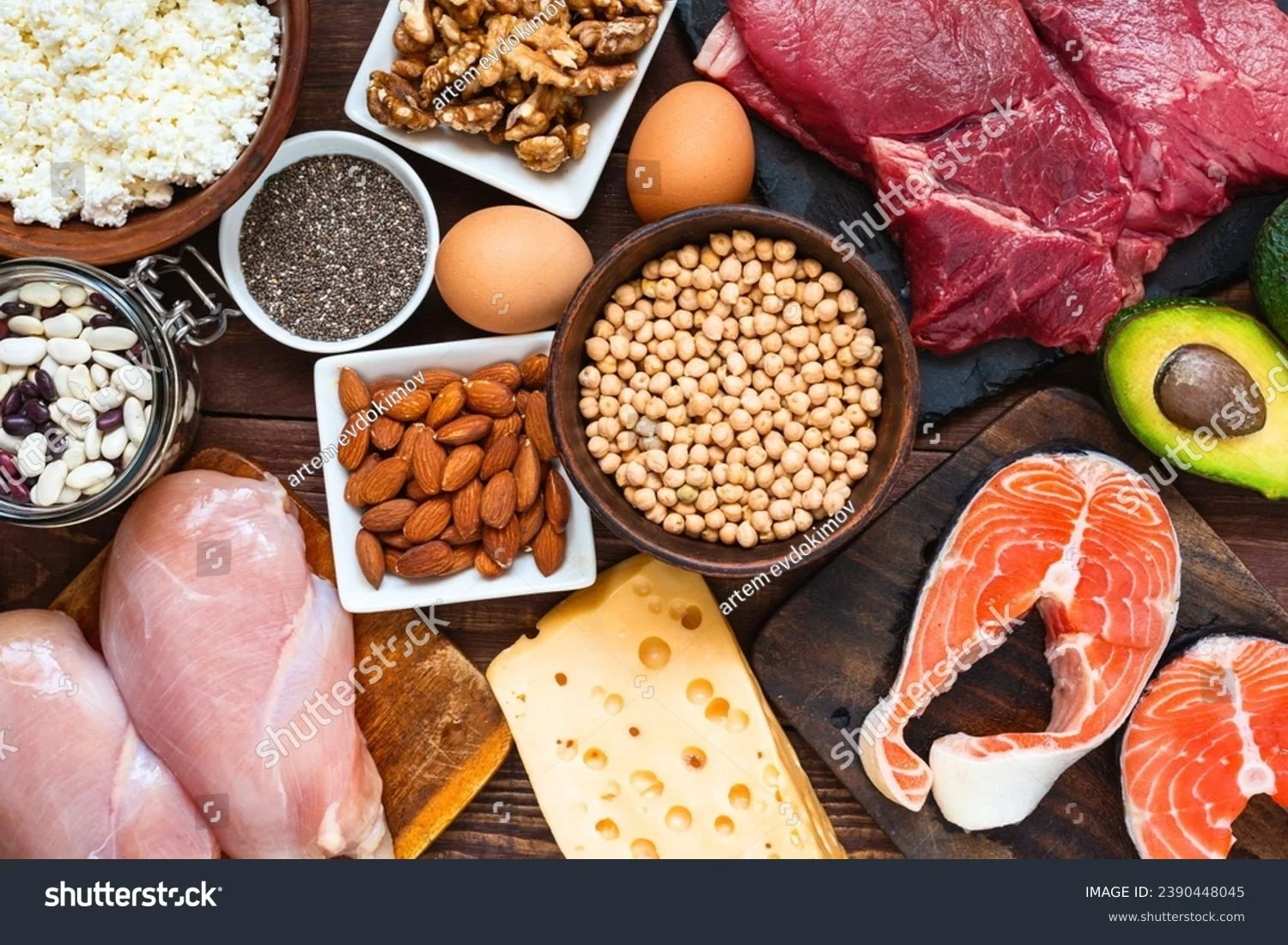
All food contain some protein. Different foods contain different levels of protein and are either a complete or incomplete source of essential amino acids.
What is protein?
If I was wearing my science hat I’d say proteins are complex structures of amino acids joined together by peptide bonds. But that’s not going to help you on a day to day basis is it? Protein is in every living thing on earth. From flowers to humans, all contain protein. Proteins are essential for life. In your body proteins are a component of muscle tissue, vital organs, neurotransmitters, enzymes, blood, connective tissue (hello collagen) and even fat tissue. It’s bloody everywhere. It’s really important and we need to get it from the foods we eat.
Right, so how much do you need?
That’s a great question, with a very straight forward answer. Just kidding. How much protein YOU need is related to the size of your body (height, weight etc), your activity level and your age. The equation most people are familiar with is 0.8g of protein per kg of body weight (or 0.36g of protein per pound of body weight in the imperial system). But this is just a baseline, to avoid deficiency. A starting off point for a sedentary adult (bit judgy, but ok).
For a 170 lb sedentary woman, this would equal about 61g of protein spread throughout her meals and snacks each day. When a single egg contains about 6.3g of protein, 61g seems like a pretty big number. And it is. Adding protein into meals and snacks can be hard for some people, particularly if they don’t have a large appetite to start with. But this is just the start. Lets see what happens when we add age to the equation.
Protein needs for older women
As our age becomes wiser, our protein needs increase. As we age, if we are sedentary and don’t eat enough protein our bodies will naturally loose muscle mass. This is a condition called sarcopenia (use that word next time you’re in the doctor’s office, you’ll sound like you REALLY know what you’re talking about). But jokes aside, sarcopenia is not something we want. Think lower quality of life as we age. More likelyhood of falls. Less independence and ability to do things for ourselves, like carrying groceries for instance. So to combat muscle loss we need to eat more protein. Our needs around the age of 40-50 increase to 1-1.2g of protein per kilogram of body weight. Using our 170 lb woman from earlier, her protein needs have increased to between 77-92g of protein a day. All she did was age a bit! But don’t stress, it is possible to add protein to your daily routine a little at a time to allow your body and your palate to adjust to the increased intake. Working with a nutritionist can help you add protein sources that fit your taste. The possibilities are really endless and every level of cooking skill can be catered to. I’m going to leave increased protein intake for physical activity for another article on another day. But if I had to give a takeaway from this it’s that worrying about how much protein we eat each day isn’t helpful and in general most of us need to eat a bit more. I’ve listed some common high protein foods below.
High protein foods
Low fat dairy products (low fat greek yoghurt, cottage cheese, low fat milk
Lean meats (chicken, turkey, fish, lean red meat)
Plant sources (legumes, nuts, seeds, lentils)
Eggs (egg whites in particular are high in protein)
Plant based protein is great, but if all of your protein comes from plant sources it can take a bit of strategy to make sure you’re getting all the essential amino acids you need. Again a proper nutrition assessment can determine whether you need to include more variety in your protein sources.
Approx grams of protein in common foods
1 cup shredded rotisserie chicken 32g
1 cup low fat greek yoghurt 23g
3 oz can of tuna (in water) 22g
1 cup shelled edamame 18g
1/2 cup cottage cheese 15g
2 large eggs 12g
