
Metabolic disorder: a personal history.
10 min read
The myth of the ‘perfect practitioner’ can be a barrier to many people seeking help to change, so let me dispel it from the start. Everyone has a story and I can guarantee, any health professional you sit across from, struggles with something. I have a lot (like a lot) of knowledge around food and it’s interaction with the body. Down to the biochemical and cellular level. But when my own mental health suffered, none of that knowledge mattered and I was just as susceptible to the current food environment as anyone else. In my work as a coach I ask my clients to share personal history around their health (physical and mental) as well as their behaviors around food and eating. So I think it’s only fair that I go first. Following is my own story of how my poor mental health led to poor physical health and eventually metabolic disorder. I don’t wanna brag, but I made myself quite sick in a relatively short period of time, and personally experienced some of the things I’ve seen my clients struggle with over the years. But first…where did I come from?
THEN
Knowing I went on to study dietetics, it’s probably not a surprise to find out I was really into physical activity and eating good food as a young adult. I credit my mom for this. As a child my mom encouraged me to try different sports. Tennis, swimming, netball, basket ball, dancing, you name it, I had a go. In addition, my Mom was (and is) a great cook. Her cooking and my large appetite were a match made in heaven. I loved food then, still do now. My father’s side of the family also made incredible dishes based on Indian, French and African cuisine and second and third helpings were highly encouraged. Fullness was ‘just a suggestion’ to stop eating and rarely the sign. My family believed a robust child was a healthy child!
In my late teens I discovered the joy of running. Spending an hour running and day dreaming to music was ‘me time’. I think it’s something to do with the rhythmical nature of being ‘in the flow’ on a good run as well as being completely unreachable for a whole hour (more possible in the 90s than it is today). I couldn’t wait for the part of the day when my responsibility’s were done and I could go for ‘my run’. The neurochemicals that were unlocked by long runs did a lot of heavy lifting to manage my undiagnosed ADHD. My brain learned the connection between a morning run and having focus for the rest of the day, crucial during the university years. And so it continued until I had my first child. Time for solo runs disappeared overnight, but I had the kind of baby who understood ‘nap time’ as a suggestion. Unless, he was in a moving vehicle. The vehicle was his stroller, the engine my legs. I had time to walk a sleeping baby around my neighborhood for around 2 hours every day. Rain, wind, blistering Australian sun, even 8.5 months pregnant with his sibling, we’d walk outside, in the fresh air, and he would nap. Then, we moved to America.
Be sure to wear some flowers in your hair

In 2016, my husband and I decided to move our young family from Sydney to San Francisco. Chasing more economic stability and running on pure adrenaline, we packed our two-bedroom apartment into a cargo container and headed for The Golden City, toddler and 5 month old in tow. We ignored the emotional impact of the move and hit the ground running. I replaced emotions with tasks. Find a preschool. Tick. Buy a fridge. Tick. Get a TV. Tick. Find a pediatrician, dentist, grocery store. Tick, tick tick. While my husband got to work fitting into an American workplace, I focused all of my attention on turning our Redwood City rental into a home. Looking back, we were both barely managing to keep our heads above water. My life looked nothing like it had a only a few weeks ago. But life was easier in other ways and I was grateful for the opportunity we’d been given. Who was I to complain?
exhausted but wired
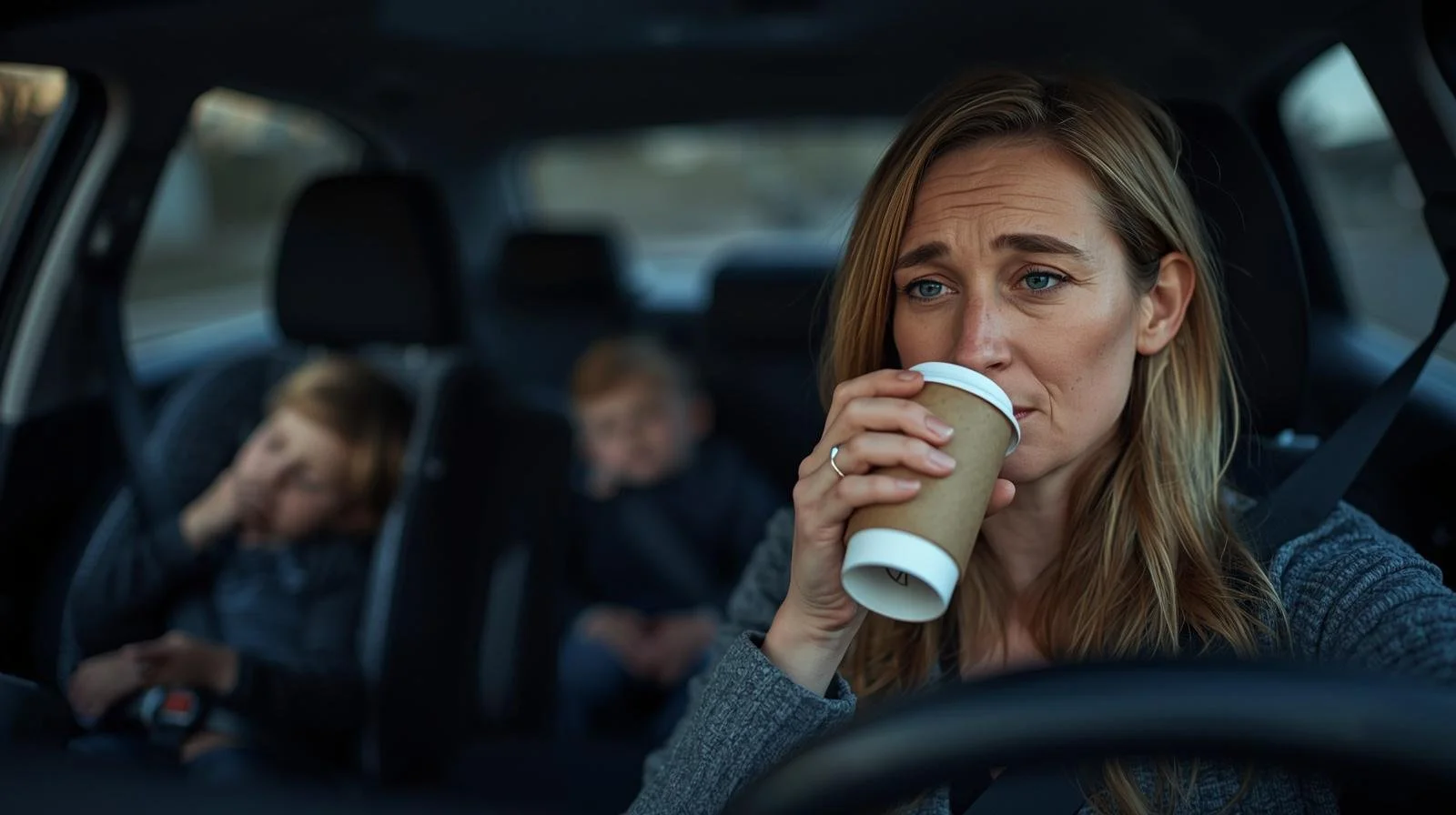
Raising little kids is hard. Doing it with no help in a foreign country is like a mental endurance sport. Now with two children who considered ‘nap time’ a suggestion and living in an unfamiliar city, I resorted to driving the kids around as they napped. As a child I’d used food as a comforting distraction tool. My brain rediscovering this prewired survival system now. With little time to prepare food for myself, I began to rely more and more on highly palatable, ultra-processed foods (UPFs). The instant gratification and sugary reward that UPFs provided gave my exhausted system and still as yet undiagnosed ADHD the dose of dopamine that I used to get from looking after myself. The slippery slope was primed and ready for me to fall down it.
The age of convenience
Most of us go through our days unaware of the many, many ways we’re are being manipulated by policy and industry. It’s my belief that no single industry is better at this manipulation than the food industry. Manipulating human behavior for it’s own benefit is basically their raison d’être. They’ve been studying our preferences and behavior for decades and they know exactly what draws us in. We want sweetness, saltiness, for food to feel good in our mouth (mouthfeel), calories and ‘value for money’ in the form of large servings. We want food to be easy to eat and convenient. Basically, our biology primes us to want as little resistance to food and eating as possible. I’m a Gen Xer, so I can still remember a time when home cooked food was the norm, eating out was rare and drive throughs were a novelty. These days the reverse is true. The food industry has married convenience and palatability so well, it has created a ‘bliss state’ of food that we find irresistible.
Sugary coffees were bliss for me. Large, very sweet coffees were something I’d never experienced before. And to have access to it from my car?! To this day there is virtually no drive through coffee in Australia. To get a simple cup of coffee produces plenty of resistance. Resistance in the form of finding a parking space, having to get the kids out of the car, walking to the cafe, waiting in line, ordering, waiting for it to be made (while entertaining the children), walking back to the car balancing your standard unsweetened, 8oz flat white in one hand, reloading the kids into carseats and inevitably forgetting about your precious coffee that you left on the car roof while you were piling wriggling toddlers into their car seats until it rolls down the front wind screen at the first red light. Yeah, pass. Definitely gives you pause to think ‘Maybe I’ll just wait til I get home’. No pause exists in America. Car culture and social policies have not only removed any resistance to ultra-processed foods, they’ve made it the ‘better choice’.
With no resistance in place and physical and emotional exhaustion the norm, it was easy to create a habit that had me automatically turning into the Starbuck’s driveway at 1.30pm each day for my standard 12 oz, syrupy coffee ‘pick me up’. Why not throw in a ham and cheese panini since I’m here anyway and haven’t had lunch? This is what the fast food industry is aiming for. It suits them if we follow our habit day after day, week after week, month after month ($$$$). I use this Starbuck’s story as an example but in truth, all other aspects of my life had veered towards the path of least resistance as well. And at the end of a long day kid wrangling or dealing with office politics, my husband and I would often phone it out. Dinner that is. We were so tired by our day to day that the mental load of figuring out what to feed ourselves for dinner was a step too far. Especially when there never seemed to be the right ingredients in the fridge to make a whole meal and our favorite cuisines could appear at our door from a few clicks on an app.
What’s up doc?
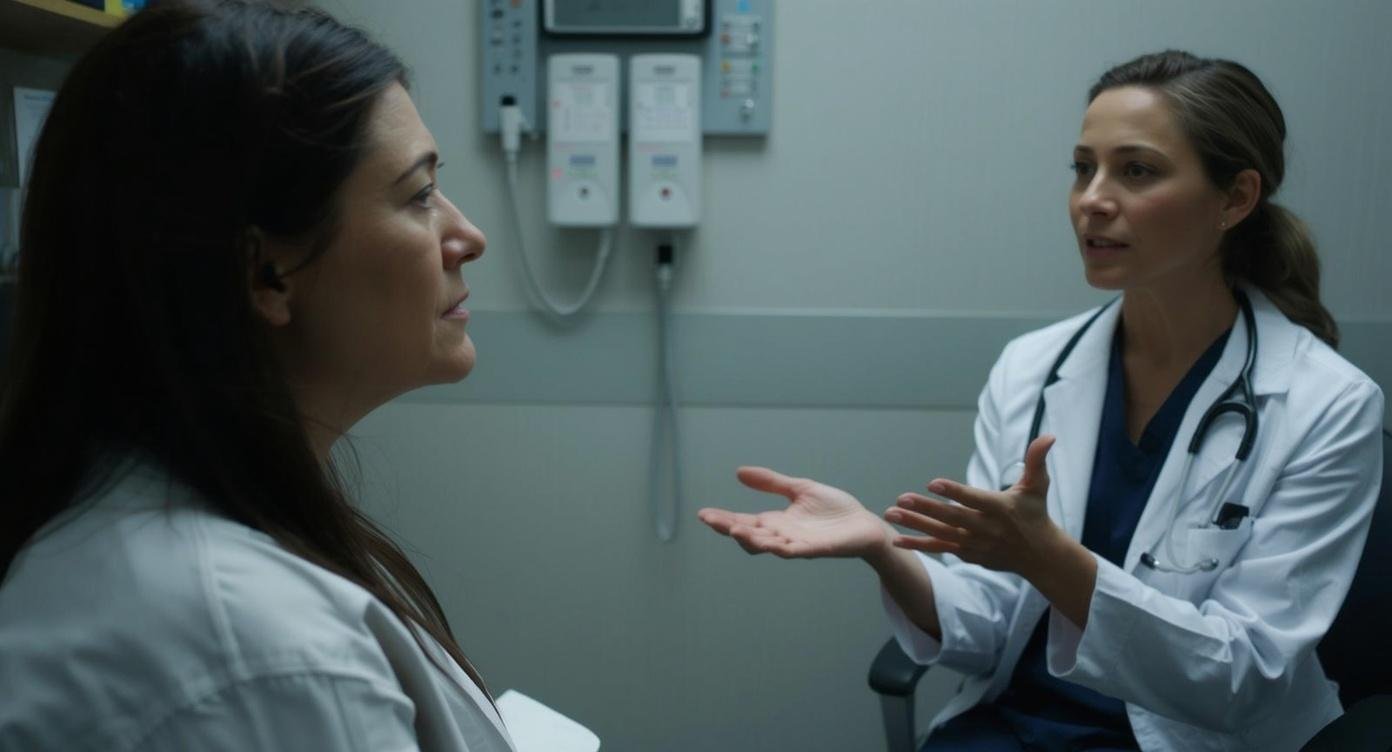
While I still managed to get my kids to all of their health appointments, I rarely visited a doctor myself. Sometime in 2018, it occurred to me that every time I did get to a check-up, the conversation always ended up circling my expanding waist circumference and worsening blood test results. It pissed me right off. This isn’t a criticism of my doctor’s medical knowledge or bedside manner, rather the result of the mindset I was in. She was right. I knew visceral fat was a health no no and I knew my blood test results were ‘concerning’. But when you’re physically and emotionally strung out from just surviving each day, doctor’s concerns sound more like criticism. Everyone seemed to have their shit together except me. I’d become fluent in negative self talk. I disassociated during my doctor’s health warnings. Internally eye rolling and thinking ‘For crying out loud I’m a bloody dietitian! I already know this stuff’. My inner critic hitting back with ‘Then why aren't you doing something about it?’. I never actually told my doctor I was a dietitian, which is pretty significant in hindsight. None of her advice stuck because a) I already knew it and b) I didn’t want to know. I was in my (late) 30s and thought ‘I’m still young, I’ll fix it later when I have more time’. So I participated in our talks just enough for her to be able to note ‘covered weight loss’ in my records and get the hell outta there. Back to my predictable, day to day, anxiety driven tasks of caretaking everyone else in my life and building resentments for later on. Then, the pandemic arrived.
locked down with your best mate
Now I know, lock down was a highly stressful time for most people. I’ll admit, it came at a time when I’d just managed to get both kids into school and enjoy a few chaos free hours in my day. Suddenly being thrown together, 24/7 with the added trauma of online learning seriously sucked. But looking back I can honestly say my real ‘lock down’ was the four years before the pandemic. Since our move my world had become very, very small. I wasn’t fully aware of just how lonely I was because I was ‘busy’. But any stay-at-home-parent will tell you, busyness is no substitute for companionship. Knowing you’d take a bullet for your kids doesn’t erase how mentally exhausting it can be to get up each morning after a night of broken sleep, and see another whole day stretched out in front of you, alone, caring for mini versions of yourself who’ve not only been genetically blessed with your attitude, but also think the appropriate way to deal with disagreement somehow involves screaming. It requires a level of mental toughness and emotional regulation I had not achieved by 33. As a new mother in Australia, I was surrounded by friends or relatives in a similar situation to hang out with Monday to Friday. Relationships I’d spent a lifetime building. Regular companionship made days feel easier and gave me a constant reminder that I wasn’t in it alone. In America, it was crickets. The loneliness was palpable. When quarantine began, overnight I suddenly had my husband and best friend home 24/7. It felt like the scene in the ‘Wizard of Oz’ when the screen goes from black and white to color. From being alone to regular adult companionship and another person to share the parental responsibilities. That was the start of slowly crawling out the depression I’d unknowingly had for years. The dreaded bell jar.
hitting the skids
Feel free to skip to the next section if you have a good understanding of blood sugar. In mid 2020 I noticed the first visible indications of my metabolism really hitting the skids. Little skin tags had popped up at the base of my neck. At first tiny but they grew remarkably fast. Because of my dietetic training, I knew they were a potential indicator for high blood sugar. But I wasn’t about to clog up my doctor’s schedule in the middle of a pandemic for her to tell me what she’d been trying to for years. I wasn’t ok, I’d pushed my body too far. Too many sleep deprived nights, too many ultra processed foods, too much visceral fat, too much stress and too little physical activity. Now, I likely had insulin resistance too.
But what do I mean when I say my metabolism had hit the skids? Basically, our body likes to maintain a steady concentration of sugar in our blood at all times. This is our baseline. The baseline will vary a small amount from person to person but it’s generally fasting blood glucose in a healthy individual. When we eat foods that are broken down into sugar, our blood sugar level temporarily rises. In order to get our blood sugar back to baseline, our pancreas releases insulin to mop up the excess sugar in our blood and cart it off to our cells. In a healthy metabolic system our cells open little doors to allow the sugar inside where it’s used for energy or stored for later. If many of our cells deny access to sugar (insulin resistance), the body has to find others ways to store it. It can a) create new storage cells (subcutaneous fat), b) put it in our ‘short term’ storage (visceral fat) or c) shove it into our organs and muscle like someone with ADHD shoves mess into cupboards when someone turns up unannounced (ectopic fat). This is where your genetics comes in. These different storage sites have very different health outcomes. Ectopic fat, as the name suggests, is ‘fat where it shouldn’t be’ like inside organs and muscle, and it’s the worst for health outcomes. Despite this, many people, including myself, have a predisposition to store excess energy this way. Eventually, we max out these storage sites as well. So a situation is created in which blood glucose is too high, insulin levels are off the charts as our pancreas tries to keep up and our cells are still refusing to take in more glucose. Or ‘hitting the skids’ metabolically. The skin tags that had popped up at the base of my neck were telling me my body was probably in this loop. When I finally got my butt back into a doctor’s office in 2022, she confirmed it. They diagnosed me with pre-diabetes and threw in fatty liver for good measure. Now two years into my 40s, I felt scared.
frenemys
Fear can be a powerful motivation for many people to make changes but not always. For the most part, people care about their mortality and don’t want to be chronically sick. After my diagnoses I didn’t change much straight away. I was scared for sure and I had a pretty well informed view of what sort of path my choices had put me on (and where it could end). But metabolic health deteriorates slowly and the symptoms of metabolic disorder are more likely to be captured in blood tests rather than things that would affect my day to day. Undetectable until the situation gets really, really bad. I’d also formed a lot of habits that I could already feel my mind starting to defend. I loved these new habits. Our relationship was toxic sure, but it still felt good. And the thought of replacing them with new habits that would feel less rewarding in the short term just didn’t sound fun.
We are all the product of our habits. They form our identity. If you haven’t guessed by now this is the part of us the food industry wants to tap into. If you’ve driven through a drive-through for a sugary coffee everyday for 3 years, that neurological path is so well trodden, the slightest reminder will have us mindlessly going through the motions. And who are you if you suddenly stop all of your a well paved habits? I’d spent a long time creating ways to survive, manipulated by a path of least resistance and reward, at a time when I desperately needed to feel rewarded. But what about my old habits and identity? The ones I’d had for the 36 years before I moved to America. Now buried so deep it was hard to remember the way I used to be. This is the stage I usually meet my new clients in. It’s completely normal to desire change and fear it at the same time.
‘Anything worth doing takes time’-Bob Dylan
If you pay close attention, you’ll notice every pre-manufactured ‘lifestyle’ change comes with what I refer to as a ‘length of time co-sign’. Why is that? I’ll be brief, it’s consumerism. The inverse of the food industry is of course, the diet industry. I understand the appeal of diet books, really I do. You’ve realized you need to make some changes and magically, here is something written by an MD, offering you an 8-12 week complete life change. You don’t need to make a single decision, they’ll do it all for you. Just follow their instructions and you’re guaranteed success. Sure, sounds great. Stick that guarantee on a skincare product and I’m all over it like white on rice. So many unknowns taken care of. Will I be able to keep it up? Doesn’t matter, only takes 8 weeks. Will it improve my health? Yep, guaranteed. Says so right on the cover. Will my partner or family question it? It’s by a DOCTOR. They’d be crazy to disagree. Will it change my identity? Yeah maybe, but that’s the point right?

Small steps snowball
Clients are usually surprised when relatively small changes make a big difference in their health status. I myself started very small, just walking for 30 minutes each day. We’d gotten a pandemic puppy so his daily walks became the only change I made for a while. Increasing the length of time bit by bit. After about a month I noticed the smaller skin tags had reduced in size and the tiny ones had disappeared altogether.
Tackling my ultra processed food habit was harder. For me, I knew I needed total abstinence from drive-throughs for a while to break the habit. I realize that’s extreme for most people. Keep in mind this is only an anecdote of what worked for me. Everyone’s road map should look different. My life doesn’t look like anyone else’s and neither does yours. When I tried my go-to Starbuck’s order after a period of time off, it didn’t taste the same. It didn’t even taste good. It’s value in my rewired brain had reduced.
Therapy led to an eventual ADHD diagnosis and that was a real game changer in my life. I’m a huge advocate for therapy. Not only did it help me make sense of things but I get to see how it helps clients over and over again. The right therapist is never a bad idea. Suddenly the thoughts of ‘not having it together’ made sense. I wasn’t a failure, I’d been coping just fine, until the move overseas surpassed my coping threshold and the wheels fell off. Looking back, I realize a lot of the compulsions I’d had towards certain foods could be put down to dopamine seeking. Sugary coffees were my kryptonite because they provided two things my brain was craving, sugar and caffeine. A stimulation double hitter. Once I was properly medicated for my ADHD, those cravings reduced, making it easier to pause rather than make decisions impulsively, including decisions about food. In a trope as old as time, as I started to feel better, I started to make better choices. Once you get to that point, going back is actually harder than just continuing on. That’s the beauty of brain rewiring.
In Conclusion
I hope this has proven that whatever you’re struggling with, it’s not for lack of trying to do better. We all live in a society that has not only eradicated any of the resistance between us and irresistible, ultra-processed, sugary, salty, fatty foods, but actually entices us towards them. Our grandparents grew up in an environment that told them ‘If you want cake, make it yourself’. Now we can get anything we want at the click of a button. Imagine that. Millenia of genetically programmed pleasure, calorie seeking genetics combined with instant gratification. How could anything go wrong?
The onus is now entirely on us to resist and we all have different types of genetics that make that harder or easier, but that’s an entire article in itself. Let’s just say that if you’re the type of person who can sit in bumper to bumper traffic on the freeway, exhausted and stressed out and not be enticed by a 60-foot sign beaconing you towards your favorite reward at the next exit. Congratulations, you don’t need to be here. For the rest of us, constant resistance is exhausting.
My health continued to improve from relatively small, simple changes. Joining a weekly running group with friends. Making sure I got my fruit, veg and water in each day. Learning some ‘go-to’ spice mixes so I could tolerate more protein. Putting up boundaries! Getting more sleep. Individual rewired pathways that snowballed me back to health. These are the same small changes science and research has been proving decade upon decade but you won’t see them in the next New York Times best seller diet book. Sound science isn’t sensational, ergo can’t make anyone rich. Society will continue to trick us into thinking we’ve been left out of the ‘secret’ to real health when in actual fact, there is no secret at all. Because of this, distinguishing actual health advice from capitalism has become harder than ever. A good rule of thumb, if they’re trying to sell you a product, no matter who they are or how much education they have, run. They have an ulterior motive. Be more selective about who get’s your attention. But that’s also a topic for another article.
You should know that even thinking about seeking help is a brave act, most people don’t make it that far. It’s ok to know you want to change but not know how to make the first step. Sure, you can know you need to get more sleep, eat more veggies, move more, but how? The how is what health coaches do best, so find one who works for you. Everything will be ok as long as you still have the desire to help yourself.
